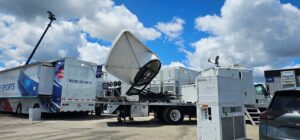
Every RF coordinator has a rogue emitter story. The wireless mic a speaker brought from home. The body-pack a wedding vendor borrowed from a colleague in a different country. The walkie-talkie a contractor handed out to his crew on the way in. None of those devices mean any harm — and any one of them can take down a broadcast feed.
A rogue emitter is any transmitter operating inside a coordinated environment that hasn’t been registered, assigned a clean channel, or verified for compliance. By definition, it’s outside the plan. And because it’s outside the plan, it can — and eventually will — land on top of something that matters.
How rogues actually get on site
They almost never arrive with bad intent. In our experience coordinating events, rogue emitters typically fall into a few predictable buckets:
- Guest talent who bring their own wireless and assume it’ll be fine.
- Sub-vendors whose gear list wasn’t on the prime vendor’s manifest.
- Venue systems — overhead paging, back-of-house radios, facilities equipment — that nobody thought to add to the RF inventory.
- International gear tuned to frequencies that are licensed to someone else on U.S. soil.
- Last-minute swaps: a unit fails at 6 a.m., someone grabs a replacement from a Pelican case, and the frequency never gets updated in the plan.
Why they do so much damage
A single rogue transmitter can create a chain of problems that look nothing like the actual cause. A body-pack on an unassigned frequency doesn’t just step on the channel it’s using — it generates intermod products that can interfere with receivers elsewhere in the band. The on-air symptom (dropouts, squelching, buzz) often shows up on a device nowhere near the rogue, which is why untrained troubleshooting can waste hours chasing the wrong microphone.
Worse, rogues compete with your monitoring. If your coordinator doesn’t know a transmitter is there, every alert it triggers looks like a mystery. That’s time you don’t have during a live event.
How we find and neutralize rogues
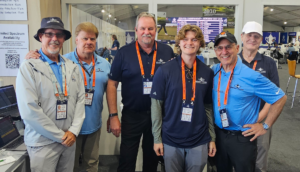
Broad Comm’s on-site enforcement team combines real-time spectrum monitoring with handheld direction-finding gear and a physical presence across the venue. When a rogue hit appears on the dashboard, inspectors triangulate on foot, identify the device, and either re-tune it to a coordinated channel or shut it down — typically in under 90 seconds from first detection.
The enforcement piece is what separates a coordination plan from a coordination result. You can have the best channel assignments in the industry, but without someone authorized to walk up to a stranger and say ‘that needs to come off,’ the plan is just paper.
Three tips for reducing rogue risk on your next event
- Build a single wireless-device registration gate and route every vendor through it — no exceptions, including talent and venue staff. If gear hasn’t been registered, it hasn’t been coordinated.
- Physically tag coordinated devices. Color-coded labels or RFID tags make it trivially obvious which transmitters belong on site. Anything unlabeled is, by default, suspect.
- Sweep during rehearsal. The 30 minutes before doors open is the most useful RF diagnostic window of the entire event. Run a full spectrum capture, compare against your assigned devices, and investigate everything that doesn’t match.
The takeaway
Rogue emitters aren’t a sign of bad actors — they’re a sign of an incomplete process. The events that eliminate them are the events that treat wireless registration as a non-negotiable step, not a courtesy. When the door is locked, the problem is solved. When it isn’t, it’s only a matter of time.
Work With Broad Comm Rogue emitters, drifting transmitters, and uncoordinated vendors shouldn’t be your problem on show day. Let Broad Comm’s on-site enforcement team neutralize threats in under 90 seconds while you focus on the event. Book a consultation at broad-comm.com.